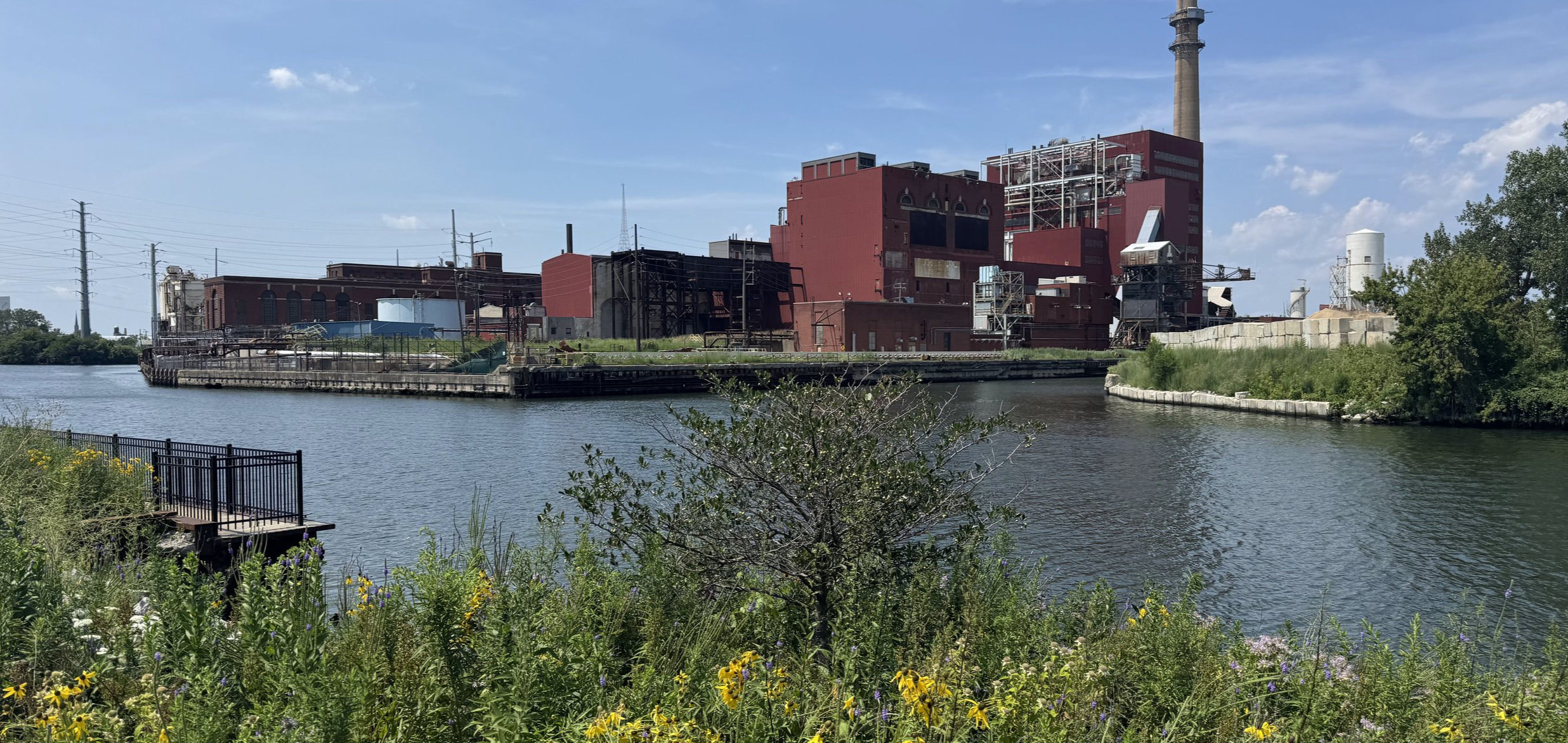
Tucked away behind the massive Amazon distribution warehouse along the South Branch of the Chicago River is a lesser-known slice of the city’s riverwalk—a mix of industry, nature, and urban grit that feels worlds apart from the polished tourist corridor downtown. While most people think of the Chicago Riverwalk as the bustling promenade between Michigan Avenue and Lake Street, the South Branch tells a different story: one of working waterfronts, reclaimed green space, and a neighborhood’s quiet connection to the water.
Here, the riverwalk is more utilitarian than ornamental. The pathway is flanked by chain-link fences in some stretches, with the looming facade of the warehouse on one side and the slow, greenish river on the other. Barges occasionally pass, a reminder that the South Branch is still very much a working river. Yet between the industrial elements, there are surprising moments of beauty—patches of wildflowers sprouting through cracks in the pavement, herons fishing along the shoreline, and reflections of the warehouse’s long lines shimmering on the water.
This section is rarely crowded. Dog walkers from nearby residential blocks pass through in the mornings, and warehouse employees sometimes use the path for a quick break. There’s an unpolished charm here; the space isn’t trying to be a postcard. Instead, it’s a slice of the river in transition, caught between Chicago’s industrial past and its push toward a greener, more public waterfront.
City planners have floated ideas for extending and beautifying the South Branch riverwalk in coming years, potentially linking this area more seamlessly to Pilsen, Chinatown, and the Loop. For now, though, it remains a quiet, slightly hidden piece of Chicago’s evolving riverfront—a place where the hum of delivery trucks blends with the sound of water lapping against the concrete, and where the city’s past and future meet in the shadow of an Amazon logo.


